The country at a glance
Italy means relatively affordable public universities, strong academic traditions, vibrant city life and regional student support programs that can noticeably reduce a family's costs.
What matters
Costs
From medium to moderately high; the north and big cities are more expensive.
Language of instruction
There are bachelor's programs in English; Italian helps a lot in everyday life.
Safety
Comfortable; in tourist areas beware of pickpockets.
Climate
From Alpine to a mild Mediterranean climate.
Student life
A lot of independence, a rich cultural environment, an international community.
Cities for study
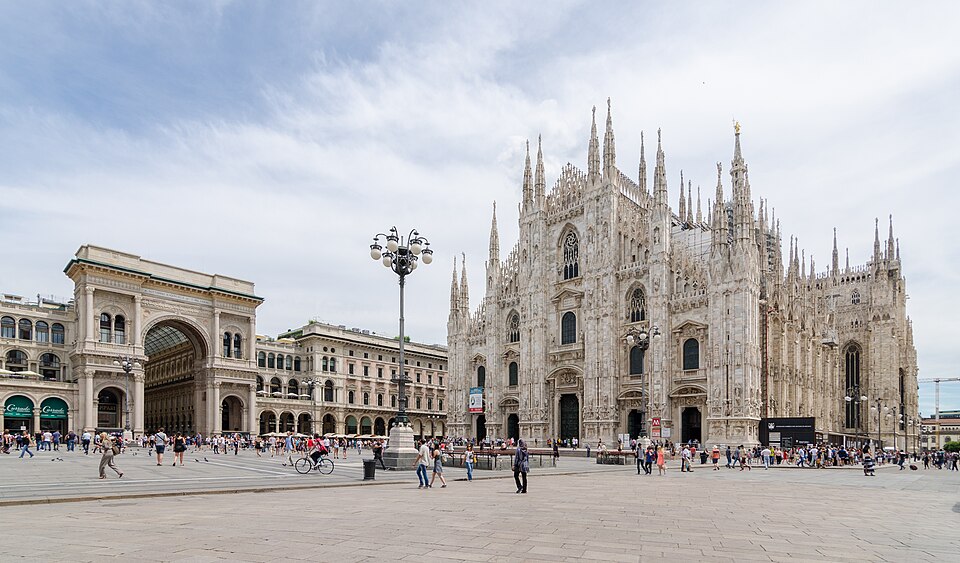
Photo: Steffen Schmitz, CC BY-SA 4.0
Milan
Bocconi, Politecnico: business, design, finance; but housing is expensive.
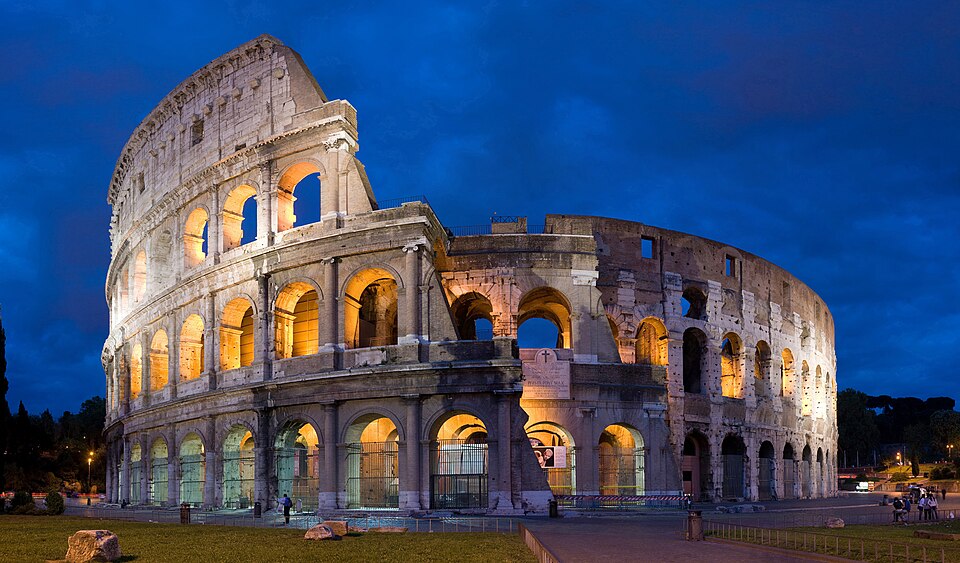
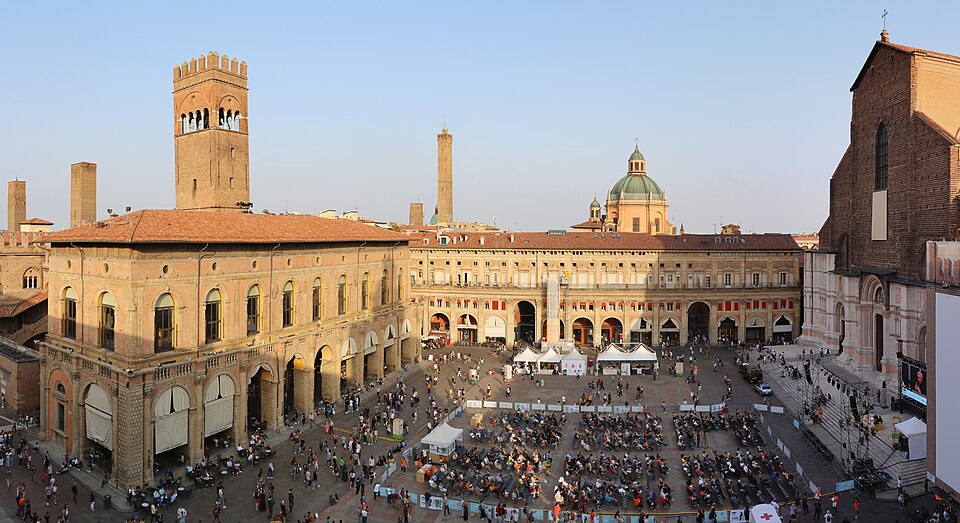
Photo: Ingo Mehling, CC BY-SA 4.0
Bologna
One of the oldest universities in Europe and the best student atmosphere.


Pros and what to watch out for
Pros
- Tuition at public universities is often reasonable.
- Regional grants cover tuition, housing or meals.
- A large choice of cities with different costs of living.
Risks and pitfalls
- Several steps: application to the university, an exam, Universitaly, a visa.
- Housing in Milan, Bologna and Rome is the main budget risk.
- Grants require strict documents on family income.
Who is Italy right for
A good fit
An independent student who is ready to deal with paperwork and apply for regional grants.
Possible with preparation
Studies in English without Italian: possible, but it is better to start the language in advance.
Probably not a fit
Expects a fully centralized and simple admission process.
Entrance exams
Entrance test
TOLC, SAT or the university's own exam, depending on the program.
Universitaly
Mandatory pre-registration for the visa.
Grants and scholarships in Italy
Regional grants (DSU / ER.GO and others)
Coverage of tuition, housing, meals or payments; depends on the region and family income.
University scholarships
Some universities give full or partial tuition waivers.
In numbers: Italy
Data from official websites, checked on 2026-10-23. Conditions change, so before applying we check every figure against its source.
D visa and Universitaly
A student visa requires preliminary registration on the Universitaly portal, confirmed by the university. The visa application deadline for a bachelor's: 30 November 2026 for the 2026/27 intake and 31 October 2027 for the 2027/28 intake. You can apply no earlier than 6 months and no later than 15 days before travel; processing takes up to 90 days. For a Foundation the visa deadline is not given on the page, so we confirm it with the university.
Funds for the visa
You must show at least €10,179.85 a year: a 6-month account statement, confirmation of a scholarship or sponsor documents. In addition, a return ticket or funds for the return and health insurance for Italy are required. The figure is from the website of the Embassy of Italy in Helsinki; for the consulate where a family from Kazakhstan applies, we check it separately.
12 years of school and Foundation
A bachelor's requires a school certificate after 12 years of study and a CIMEA or Declaration of Value document. Graduates with 11 years of school can take a Foundation: for example, at Università Cattolica it lasts one academic year (800 hours), and it requires at least 11 years of school.
Foundation at Cattolica
The cost is €9,450 in three payments (€1,500 on confirmation, €3,975 each by 31 October 2027 and by 28 February 2028), plus a separate non-refundable application fee of €100. Classes run from the end of September 2027 to the end of May 2028. Applications in three rounds: by 17 February, by 7 April and by 5 May 2027 (the third round if places remain).
Bocconi: tuition fees
For 2027/28 the first year of a bachelor's costs €17,700 a year, and the diploma fee is €215. The page is marked as updatable, so the amounts may change; indexation is possible during the studies.
Work while studying
On a student permit you can work up to 1,040 hours a year, on average no more than 20 hours a week; for a short period (up to 6 months) up to 40 hours a week is allowed, provided the total does not exceed 1,040 a year. Beyond that the permit has to be converted into a work permit. Source: the City of Milan portal for students.
Bocconi: two sessions for the 2027/28 intake
According to the university's page for the 2027/28 academic year, a bachelor's has two sessions: Early (applications 2–29 September 2026, already closed; results in mid-November) and Winter (applications from 25 November 2026 to 26 January 2027, until 15:00 Italian time; results in mid-March 2027). The Bocconi online test, SAT or ACT are accepted. The assessment is built on two elements: the test result 55% and school grades of the second-to-last and third-to-last years 45%. The last Bocconi test date for the Winter Session is 21 January 2027, booked no later than 48 hours in advance. We have not checked the deadlines of the Bocconi4Access scholarship or the fact that there used to be three sessions. Page checked on 26.10.2026.
How much study costs
At public universities the cost often depends on family income; private ones are noticeably more expensive.
We check the exact cost of a specific program on the university's official website for the current year.
Italy universities in the My Study Free database
16 universities with data on programs, requirements and costs. Detailed profiles are available at a consultation and in the personal account.
- Istituto Marangoni Milano
- LUISS Guido Carli
- University of Bologna
- University of Milan
- Polytechnic University of Milan
- University of Padua
- University of Pisa
- Sapienza University of Rome
- Tor Vergata University of Rome
- University of Siena
- University of Trieste
- University of Turin
- Bocconi University
- University of Brescia
- University of Pavia
- University of Florence
Book a consultation
We'll select universities in Italy to fit your child's grades, English and budget and draw up an admission plan.