The country at a glance
The United Kingdom has the world's strongest universities and transparent admission through UCAS with clear requirements for each course. Tuition and living are expensive, and grants are usually partial.
What matters
Costs
London is the most expensive; regional cities are not cheap either.
Visa
Proof of funds: £1,529 a month in London and £1,171 outside it for applications before 29 November 2026; from 30 November 2026, £1,570 and £1,203 (we check on gov.uk).
Language of instruction
English.
Climate
A mild maritime climate, often rainy.
Student life
Strong student support, campuses and student communities.
Cities for study
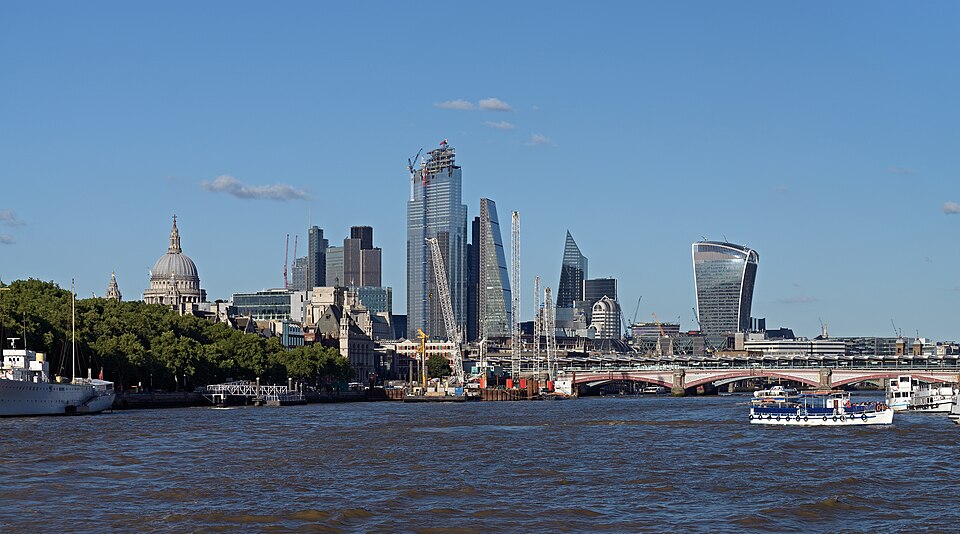
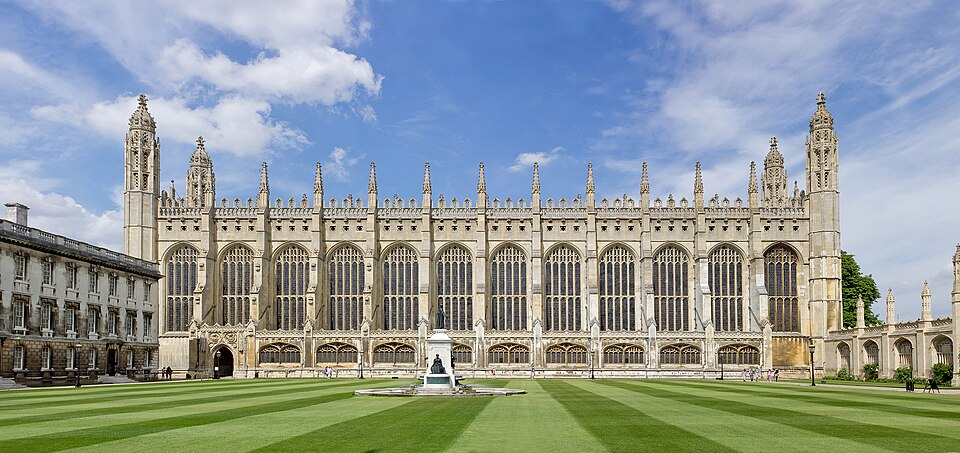



Photo: Anthony Parkes, CC BY-SA 2.0

Manchester, Birmingham, Leeds
Strong universities and costs lower than London's.

Photo: Saffron Blaze, CC BY-SA 3.0

Edinburgh, Glasgow
The Scottish system: a bachelor's usually takes 4 years.
Pros and what to watch out for
Pros
- Transparent requirements for each course.
- Worldwide recognition of degrees.
- A bachelor's in England takes 3 years.
Risks and pitfalls
- A high total cost.
- Full grants are rare.
- Early deadlines for top universities.
Who is United Kingdom right for
A good fit
Strong academic preparation and a clear choice of subject.
Possible with preparation
Is ready for early tests and an application strategy through UCAS.
Probably not a fit
The family has a limited budget and no funding plan.
Entrance exams
15 October
Oxford, Cambridge, medicine, dentistry, veterinary science.
Mid-January
Most other bachelor's programs.
Grants and scholarships in the United Kingdom
University scholarships
Mostly partial: for example, Imperial offers £15,000 a year. We check whether the scholarship is available for Kazakhstan.
In numbers: United Kingdom
Data from official websites, checked on 2026-10-25. Conditions change, so before applying we check every figure against its source.
Money for the student visa
According to Statement of Changes HC 584 of 3 September 2026 (we read a retelling by a law firm and an education agency, not the primary source), for applications submitted from 30 November 2026 you must prove £1,570 a month when studying in London and £1,203 outside it, for each month of the course, but for no more than 9 months. That is £14,130 and £10,827 for 9 months. Applications submitted before 30 November are considered under the previous amounts: £1,529 and £1,171. The maximum housing fee that can be counted also rises to £1,570. Before applying we check the amounts on gov.uk, since the conditions are published there.
Proof: the 28-day rule
The money must stay in the account continuously for at least 28 days before applying, and the period is counted from the last entry in the statement (according to the University College London page; the page has no date). The amounts UCL gives on the same page (£1,334 a month) are out of date, so we take the figures from HC 584 above.
UCAS deadlines for the 2027 intake
According to UCAS, 15 October (18:00) was the deadline for Oxford, Cambridge and most courses in medicine, dentistry and veterinary science, so for the 2027 intake it has already passed. For most other courses the equal-consideration deadline is 13 January 2027 (18:00). Late applications: until 30 June applications are sent to universities, after that they go into Clearing; the final deadline for applying for 2027 is 23 September. Many universities accept applications from international students later, but this must be checked with the university.
Durham: Inspiring Excellence scholarship for 2027
According to the university's official page: scholarships for international students starting a first bachelor's degree in 2027, in two amounts: £5,000 or £10,000 a year for up to three years (up to £15,000 or £30,000 for a three-year program). This is a tuition fee discount, not a cash payment. Scholarship application deadlines: 7 December 2026 (answer 18 December), 15 March 2027 (answer 29 March) and 1 May 2027 (answer 15 May); the UCAS equal-consideration deadline is 13 January 2027, 18:00 UK time. Conditions: self-funded (no other scholarship or sponsor), Durham chosen as the Firm Choice in UCAS (not Insurance), a full-time program, admission not through Clearing and not through the International Study Centre, and meeting the program's requirements. The selection section of the page mentions master's studies, so the university asks for details to be clarified at inspiring.excellence@durham.ac.uk. Page checked on 26.10.2026.
What we have not yet confirmed
The figure in the card, “£29,000–70,000 a year”, for international tuition and the Imperial scholarship of £15,000 a year have not yet been checked against the universities' official pages. The Immigration Health Surcharge (IHS) and the rules on student work were not covered in this check. Until they are checked, we give them to clients as a guideline.
How much study costs
Tuition for international students at leading universities is roughly £29,000–70,000 a year, depending on the university and course.
We check the exact cost of a specific program on the university's official website for the current year.
United Kingdom universities in the My Study Free database
20 universities with data on programs, requirements and costs. Detailed profiles are available at a consultation and in the personal account.
- Durham University
- Imperial College London
- King's College London
- Lancaster University
- London School of Economics and Political Science
- Queen Mary University of London
- University College London (UCL)
- University of Birmingham
- University of Bristol
- University of Cambridge
- University of Edinburgh
- University of Glasgow
- University of Leeds
- University of Manchester
- University of Nottingham
- University of Oxford
- University of Sheffield
- University of Southampton
- University of St Andrews
- University of Warwick
Book a consultation
We'll select universities in the United Kingdom to fit your child's grades, English and budget and draw up an admission plan.